5 Ways to Save Money on Custom Kitchen Cabinets
Cabinets are the biggest single cost in a modular kitchen. These five decisions can trim the bill noticeably, without leaving you with a kitchen that sags, swells or squeaks in three years.

Key takeaways
- Use BWP plywood only where water is a real risk; HDHMR is fine for overhead cabinets.
- Standard module sizes are cheaper and faster to produce than fully bespoke dimensions.
- Spend on the hardware you touch daily (hinges, drawer channels); skip gadgets you won't use.
- High-gloss laminate can deliver an acrylic-like look for less.
- Freeze your design and appliance list before production. Changes later are expensive.
Cutting costs on a kitchen is easy. Cutting costs without regretting it is the hard part. The cheapest quote often hides thinner boards, unbranded channels and edge banding that peels within a monsoon or two.
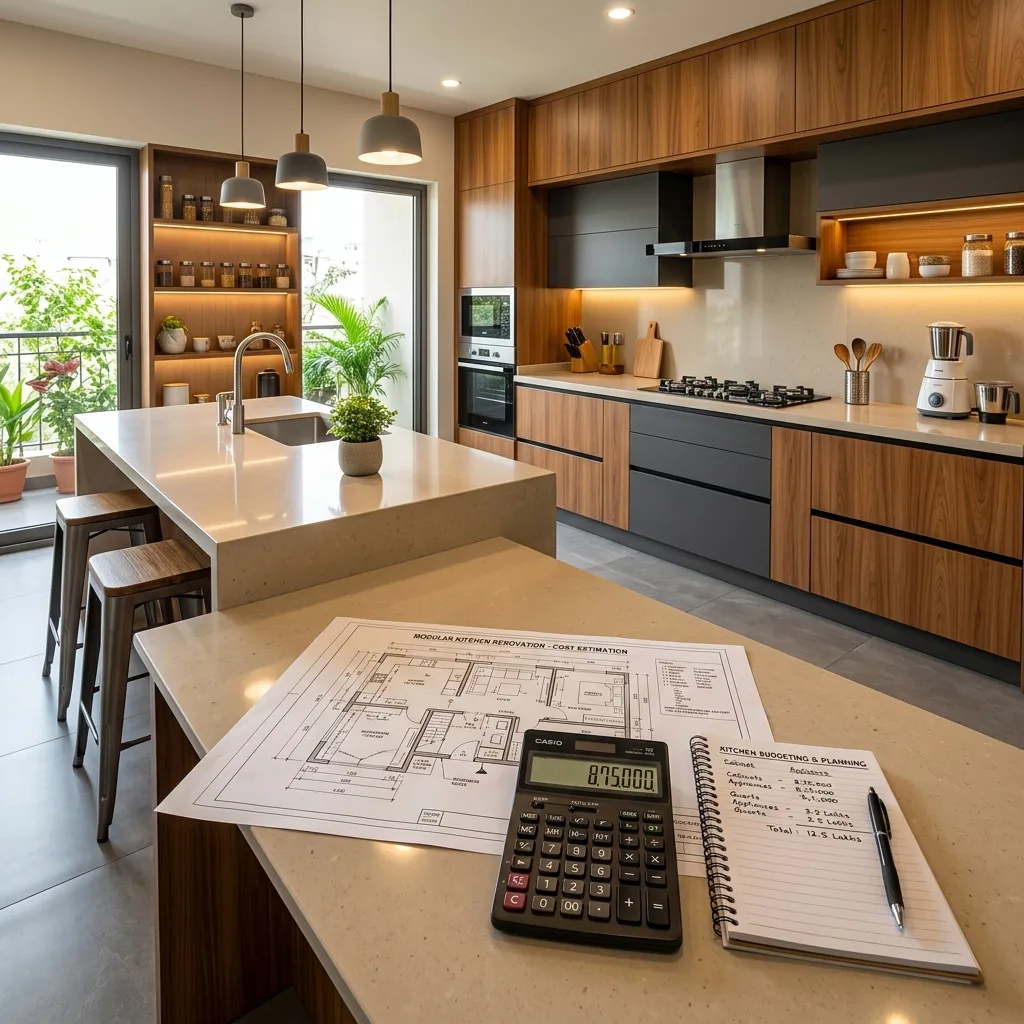
The trick is knowing which parts of a cabinet carry the structural load and which are mostly cosmetic. Across hundreds of homes we have built in Delhi, Gurugram, Noida, Faridabad, and Ghaziabad, value-engineering a kitchen properly routinely saves 22–30% compared with an over-specified showroom quote. You can test how each of these material and hardware swaps changes your budget in real time using our 60-Second Modular Kitchen Cost Calculator, or preview two-tone laminate vs. acrylic combinations on your own kitchen photo in our AI 3D Kitchen Redesign Studio.
1. Put premium materials only where they're needed (Hybrid Carcass Zoning)
Not every cabinet faces the same moisture or load conditions. The sink base and dishwasher housing deal with slow trap leaks, condensation, and daily mopping; a wall cabinet above the counter almost never gets wet.
- IS:710 BWP (Boiling Water Proof) marine plywood for the sink unit and wet-zone base cabinets. Certified Bureau of Indian Standards (BIS) IS:710 plywood uses phenolic resins that resist delamination even under prolonged water exposure, whereas standard IS:303 MR ply is meant only for dry interiors.
- 18 mm Action Tesa or Century HDHMR (High Density High Moisture Resistant board) for overhead wall cabinets, tall appliance housings, and dry-zone shutters. HDHMR offers superior screw-holding density (850+ kg/m³), a flatter surface for laminates, and costs 18–24% less than marine ply.
This zoned hybrid approach keeps structural strength where it counts while trimming ₹25,000–₹42,000 off a typical medium-sized kitchen. Our Delhi NCR cost guide explains how material choices affect the final quote.
2. Design around standard module sizes and 8×4 ft board yield
Factory-made modular kitchens are cut on CNC nesting machines from standard 8×4 ft (2440×1220 mm) boards. When a kitchen is planned around standard module widths—450 mm, 600 mm, 750 mm, and 900 mm—our nesting software achieves 88–92% sheet utilisation. When a designer specifies arbitrary custom widths (like 535 mm or 680 mm), off-cut wastage jumps by 15–20%, and internal cutlery trays, tandem dividers, or bottle pull-outs no longer fit without custom fabrication.
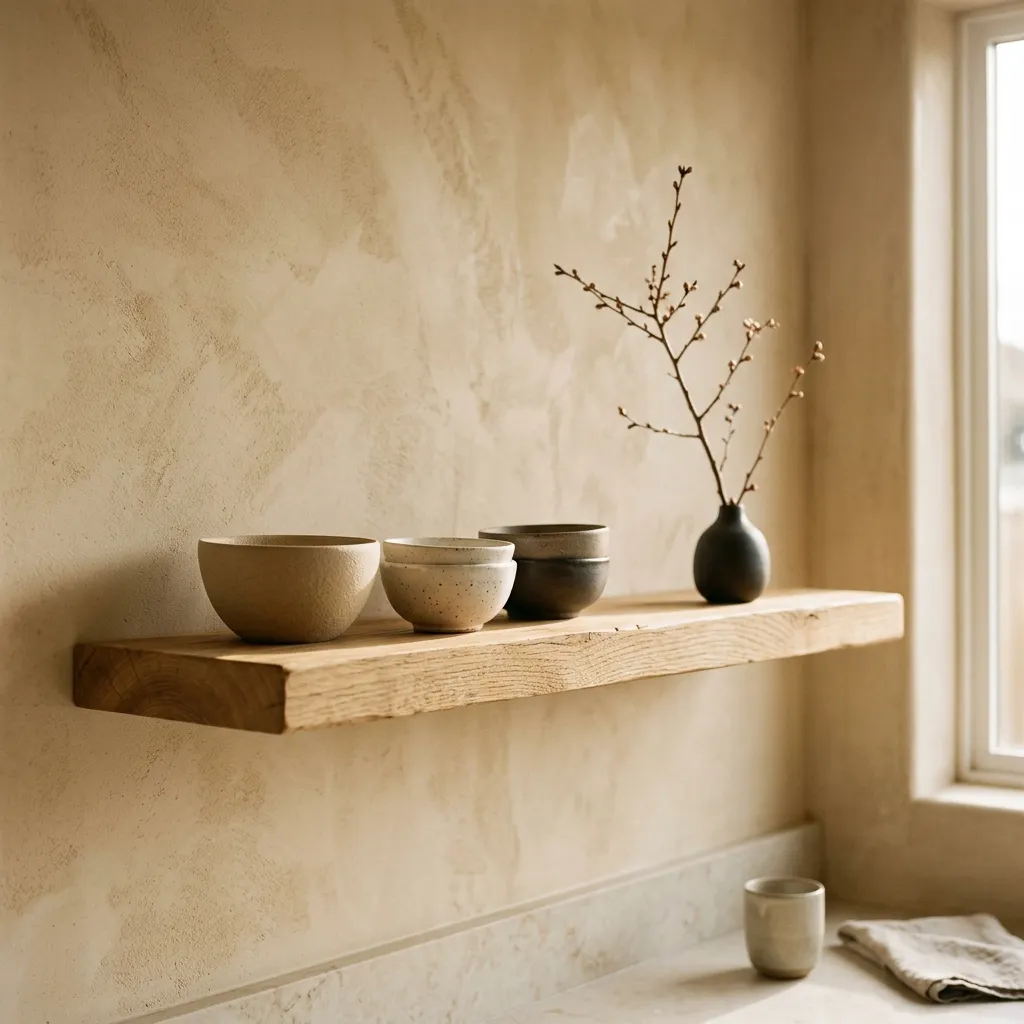
Ask your designer to plan the run in standard modules and use 50–75 mm matching filler strips or open spice niches to absorb leftover wall gaps. You'll get the same storage for noticeably less, and faster production.
3. Prioritise hardware you use every day
Hardware is where quotes balloon. S-carousels, LeMans corner trays, magic corners, motorised lift-ups, and 6-basket tall pantry larders look impressive in showrooms, but a single imported corner mechanism plus a tall pull-out larder can add ₹45,000–₹75,000 to your bill.
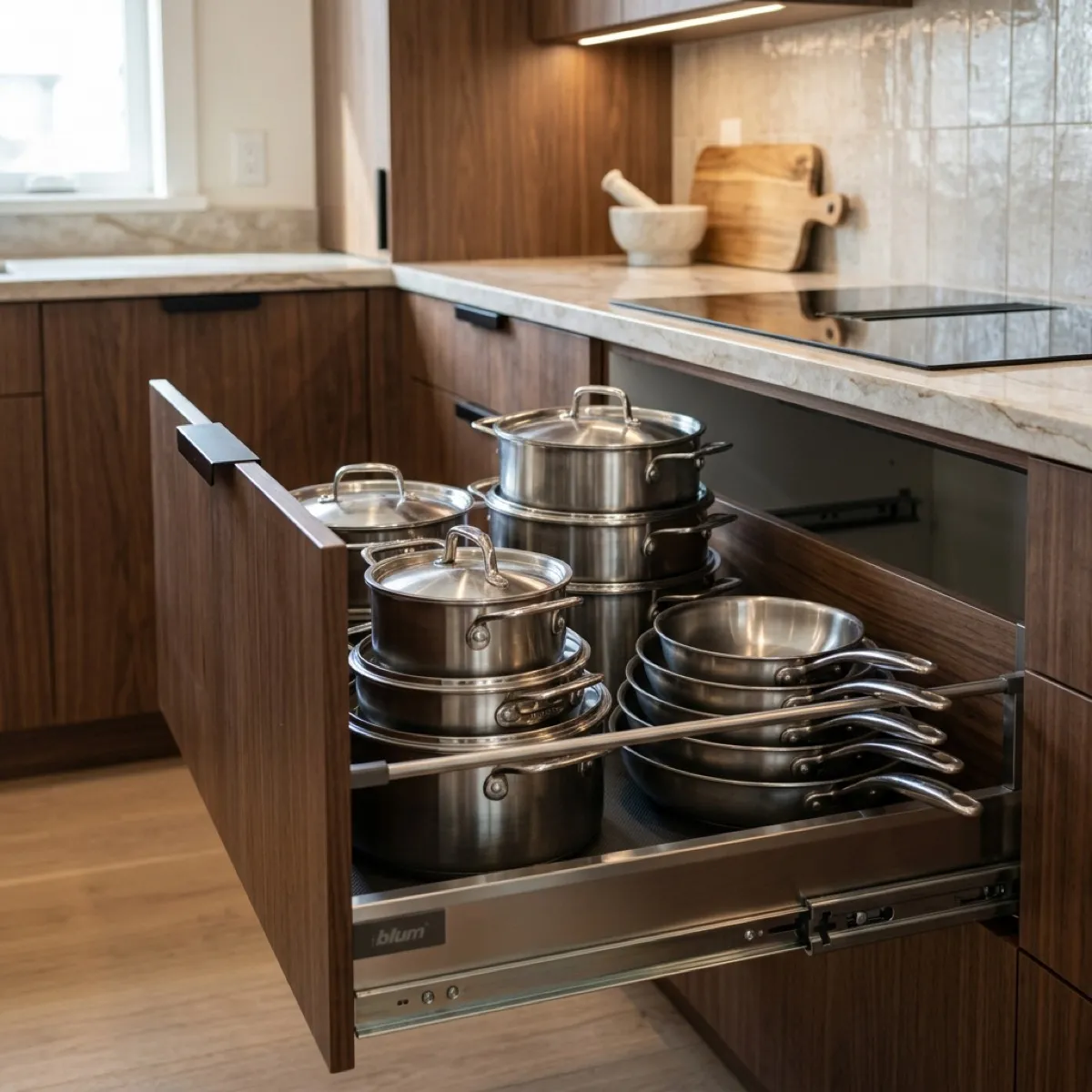
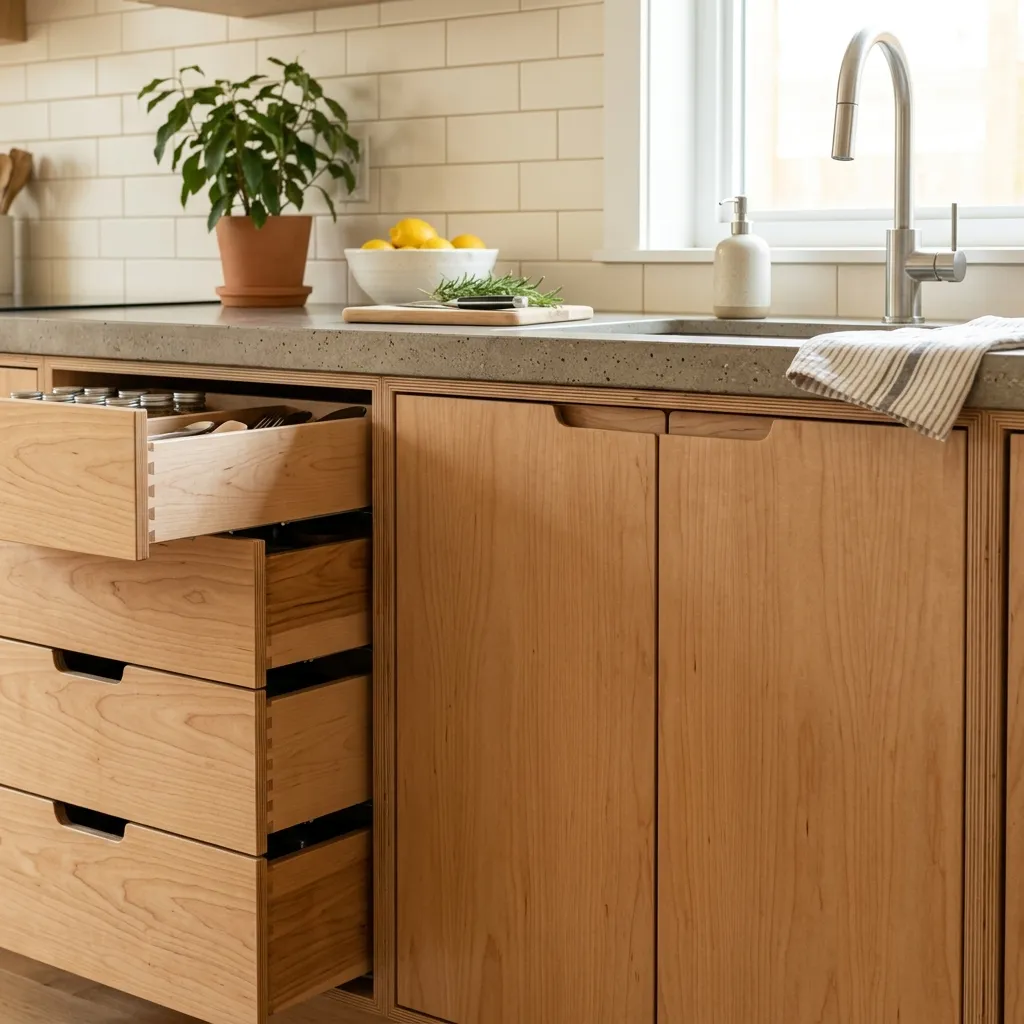
Worth paying for: engineered soft-close hinges and heavy-duty tandem drawer runners from Blum, Hettich, or Häfele. You will open your main cutlery, masala, and kadhai drawers 20 to 40 times a day—over 100,000 cycles in a decade.
Think twice about: elaborate corner mechanisms (a simple L-shelf blind corner for seasonal pressure cookers or bulk atta tins costs zero extra hardware), and steel wire tall-unit pull-outs (replace them with 4 internal full-extension tandem drawers inside the tall unit, which hold more weight and cost 35% less).
4. Choose finishes strategically
Acrylic and automotive PU look stunning, but you don't need them on every square foot. Smart ways to get a designer look for less:
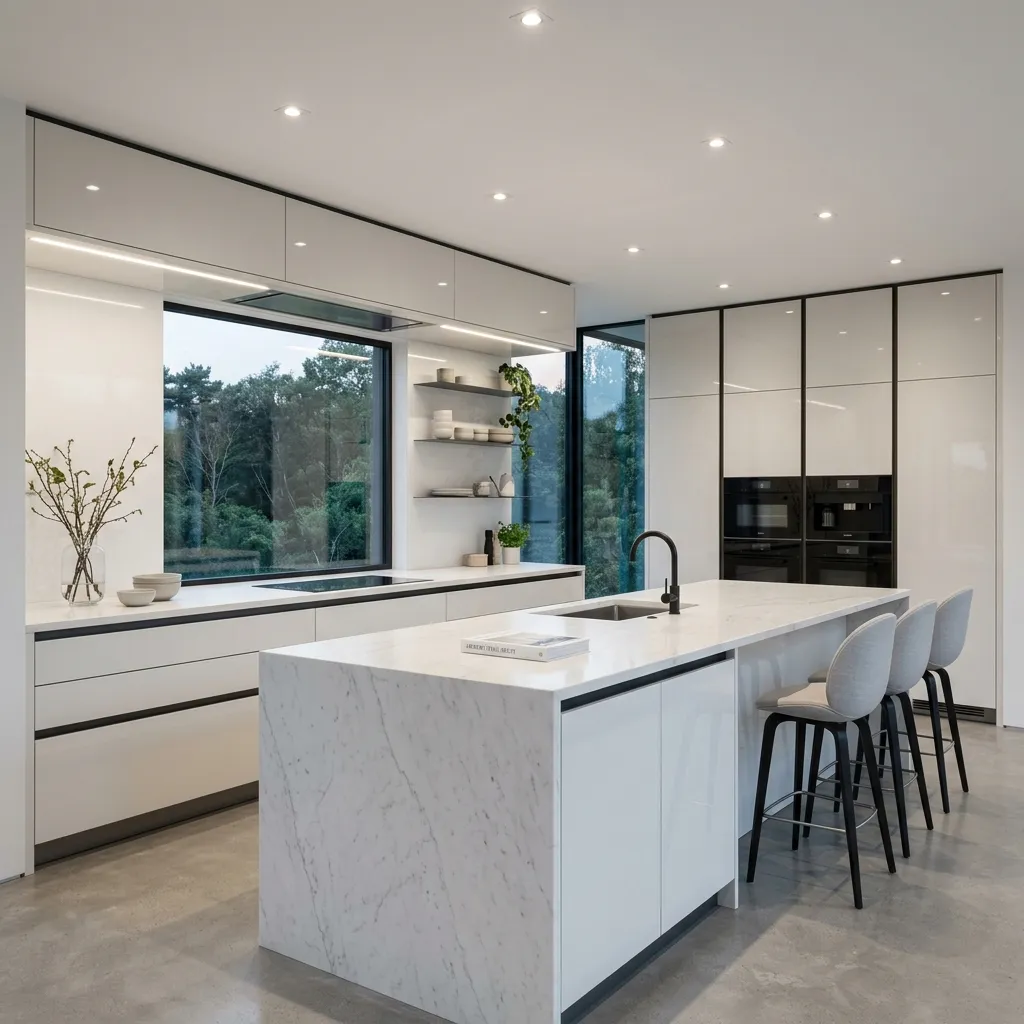
- 1.0 mm high-gloss or anti-fingerprint laminate instead of 1.5 mm acrylic or PU: delivers 85% of the visual impact at 40–55% lower shutter cost.
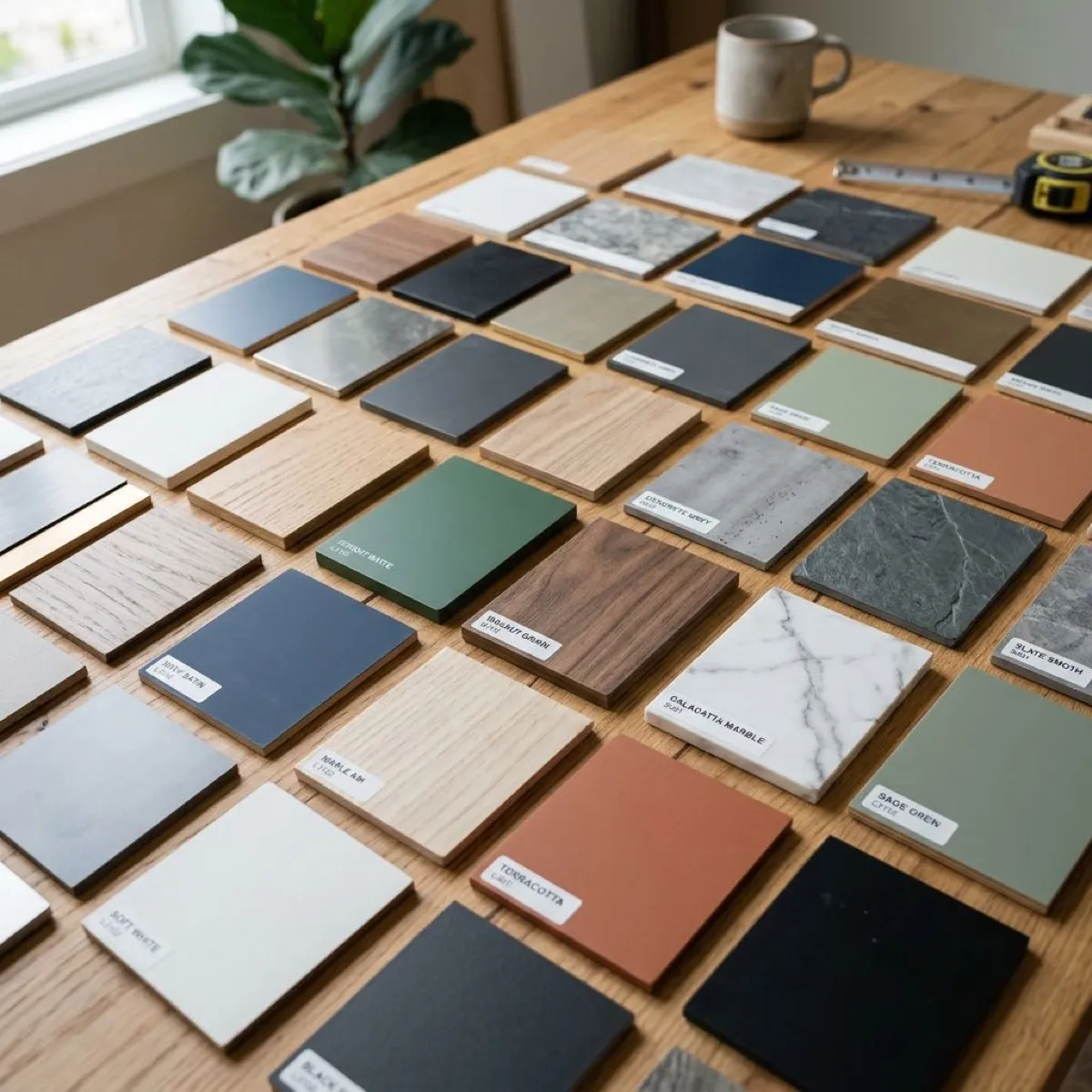
- Two-tone finish zoning: put premium acrylic or fluted glass only on eye-level overhead cabinets (around 35% of total shutter area), and use tough, scratch-resistant matte or wood-grain laminate on base cabinets.
- 0.8 mm white balancing laminate inside carcasses: skip wood-grain or coloured interior laminates unless a cabinet has clear glass doors. White interiors reflect light and save ₹12,000–₹18,000 across a full kitchen.
Compare finishes in detail in our kitchen laminates guide and see real two-tone kitchens in our kitchen design gallery.
5. Lock the design and appliance specs before production starts
The most expensive change is the one made after factory CNC cutting begins. A new chimney width, a wider French-door refrigerator, or a shifted sink drain can mean scrapping finished shutters, re-boring panels, and paying rush re-order charges.
- Finalise exact model numbers for your hob, chimney, sink, microwave, oven, and refrigerator before signing off on the production drawing.
- Approve a 3D elevation and check every drawer, corner clearance, and door swing.
- Confirm that civil plumbing and 16A electrical points match the MEP drawing before installation day.
Cost-Saving Engineering Matrix: Baseline Quote vs. Smart Hybrid Spec
How much do these five engineering decisions actually save on a real Delhi NCR project? Below is a direct comparison for a typical 10×8 ft L-shaped modular kitchen (30 running feet of combined base and wall cabinetry):
| Strategy / Component | Showroom Baseline Spec | Smart Value-Engineered Spec | Savings (₹ & %) | Durability Impact |
|---|---|---|---|---|
| 1. Carcass Board Zoning | IS:710 BWP Ply on 100% of base & wall units (₹1,12,000) | IS:710 BWP Ply on wet/base units + 18 mm HDHMR on dry overheads (₹86,500) | ₹25,500 (23% saved) | Zero loss; HDHMR has higher screw-holding density in dry wall zones |
| 2. Module Standardisation | Custom odd-width cabinets + all closed overheads (₹48,000) | Standard 450/600/900 mm modules + 1 open shelf bay (₹36,000) | ₹12,000 (25% saved) | Zero loss; reduces board off-cut waste from 22% to under 9% |
| 3. Corner & Tall Hardware | Magic Corner + 6-tier wire pantry pull-out (₹68,000) | Heavy-duty Blum/Hettich tandem drawers + shelved blind corner (₹34,000) | ₹34,000 (50% saved) | Higher reliability; fewer moving linkages that can jam under load |
| 4. Shutter Finish Mix | 1.5 mm Acrylic on all base & wall shutters (₹84,000) | Acrylic on overheads + 1.0 mm IS:2046 matte laminate on base (₹53,500) | ₹30,500 (36% saved) | Better scratch & scuff resistance on high-traffic lower cabinets |
| 5. Pre-Production MEP Lock | Post-cutting site modifications for fridge/hob (₹14,000 rework) | Frozen appliance cut-outs & laser-verified MEP before CNC cutting (₹0) | ₹14,000 (100% saved) | Preserves factory PUR edge-sealing without on-site carpenter cuts |
| Total Cabinetry Cost | ₹3,26,000 | ₹2,10,000 | ₹1,16,000 (35.5% saved) | Identical 10-year structural lifespan |
What you should never cut
Save on looks if you must. Never save on the parts that hold the kitchen together.
- The sink-base board. Water damage here ruins the cabinet; insist on IS:710 BWP marine plywood and an aluminium or PVC drip mat.
- PUR edge banding quality. Poor EVA glue lets steam into the board edges and causes swelling within 18 months.
- Hinges and drawer channels. Cheap unbranded channels sag, squeak and fail first under heavy Indian steel utensils.
- Proper installation and laser levelling. Even the best cabinets misalign on an unlevel granite platform.
Bonus: read quotes properly
Two quotes can look very different simply because they're pricing different things. Ask every vendor for a line-item breakdown naming board type, laminate brand and thickness, and hardware brand per module. That's the only way to see whether a lower price is real engineering savings or just a lower specification.
Frequently asked questions
How can I reduce the cost of a modular kitchen?
Use BWP plywood only in wet zones and HDHMR elsewhere, design around standard module sizes, prioritise everyday hardware over specialised gadgets, use high-gloss laminate instead of acrylic, and finalise appliances before production to avoid costly changes.
Is HDHMR good for kitchen cabinets?
HDHMR is a good, cost-effective choice for overhead and dry-zone cabinets. For the sink base and areas exposed to regular water, BWP plywood is the safer choice.
Which kitchen accessories are worth the money?
Branded soft-close hinges and good-quality drawer channels give the best value because they are used constantly. Deep drawers for utensils are usually more useful than complex corner mechanisms.
Are open shelves cheaper than kitchen cabinets?
Yes. Open shelves need no shutters, hinges or handles, so replacing a few wall cabinets with shelves can lower costs. Keep them away from the hob to avoid grease build-up.
Planning a kitchen in Delhi NCR?
Get a free, itemised estimate and a 3D design consultation from our kitchen designers.