Handleless Kitchen Design: Is It Practical for Indian Cooking?
Clean lines, no knobs and nothing to snag a dupatta on. Handleless kitchens are everywhere in new apartments, but do they stand up to a busy Indian kitchen?

Key takeaways
- "Handleless" kitchens still have a way to open doors, using recessed profiles, integrated edges or push-to-open mechanisms.
- Gola (channel) profiles are the most popular and practical choice for Indian kitchens.
- Without protruding handles, shutters are quicker to wipe down and safer in tight spaces.
- Push-to-open suits overhead cabinets but is less ideal for heavy, frequently used drawers.
- Handleless systems can cost more than standard handles, mainly for profiles and specialised hardware.
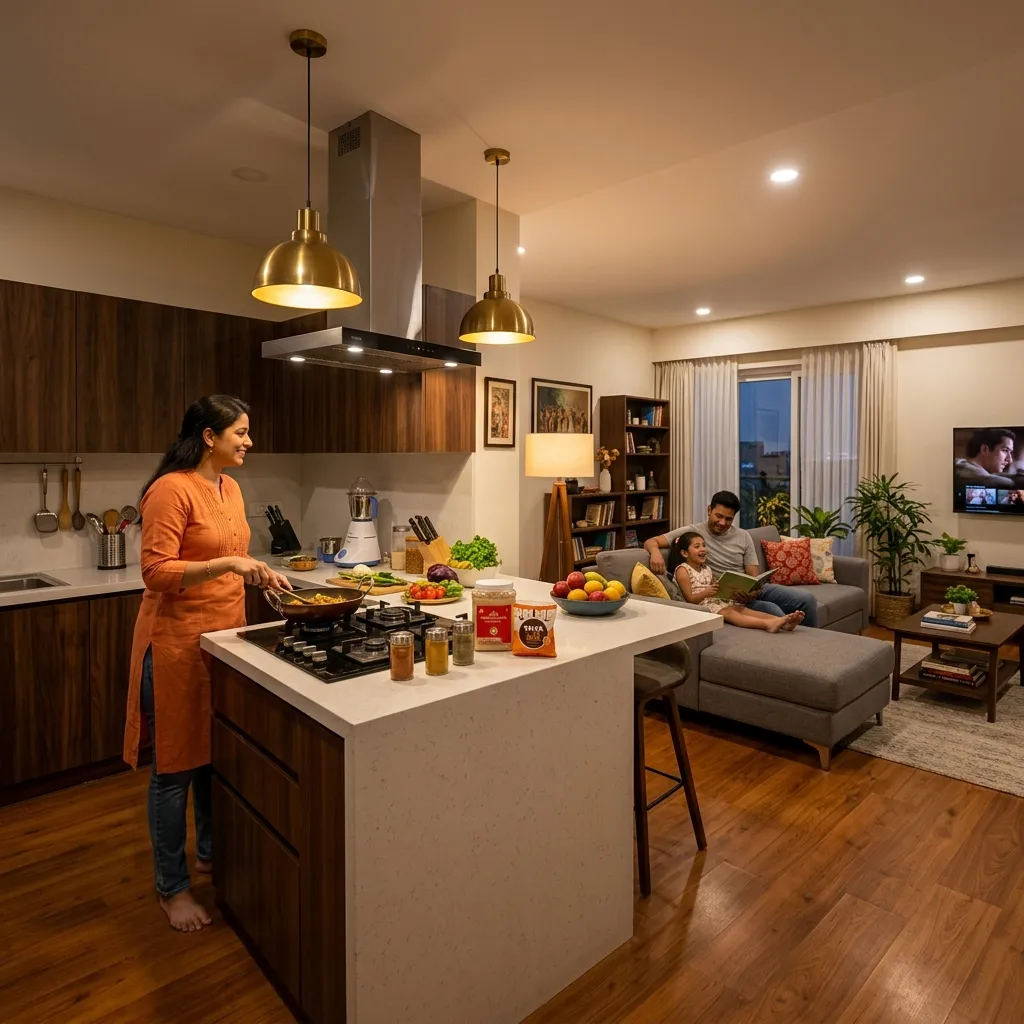
Walk through any new show flat in Gurugram, Noida, or South Delhi and you'll notice something missing from the kitchen: handles. Flat, uninterrupted shutters have become shorthand for a modern home. But a kitchen that only looks good in a show flat isn't much use in a home where someone cooks two or three meals a day.
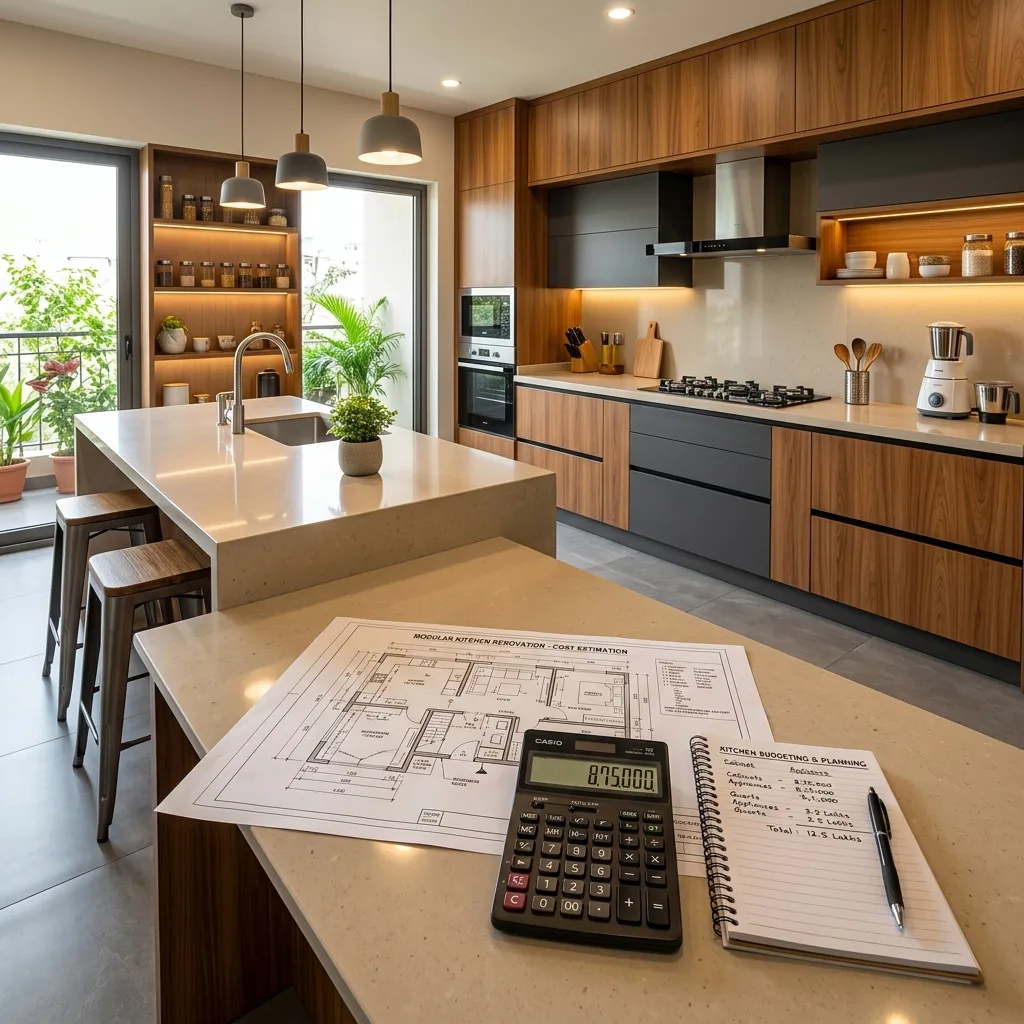
Below, we break down how handleless kitchens are engineered, which systems actually hold up to heavy Indian cooking across Faridabad and Ghaziabad homes, and the ergonomic trade-offs to know about before you commit. You can also preview handleless Gola shadow lines on your own kitchen photo in our AI 3D Kitchen Redesign Studio or compare hardware costs in our 60-Second Modular Kitchen Cost Calculator.
What is a handleless kitchen?
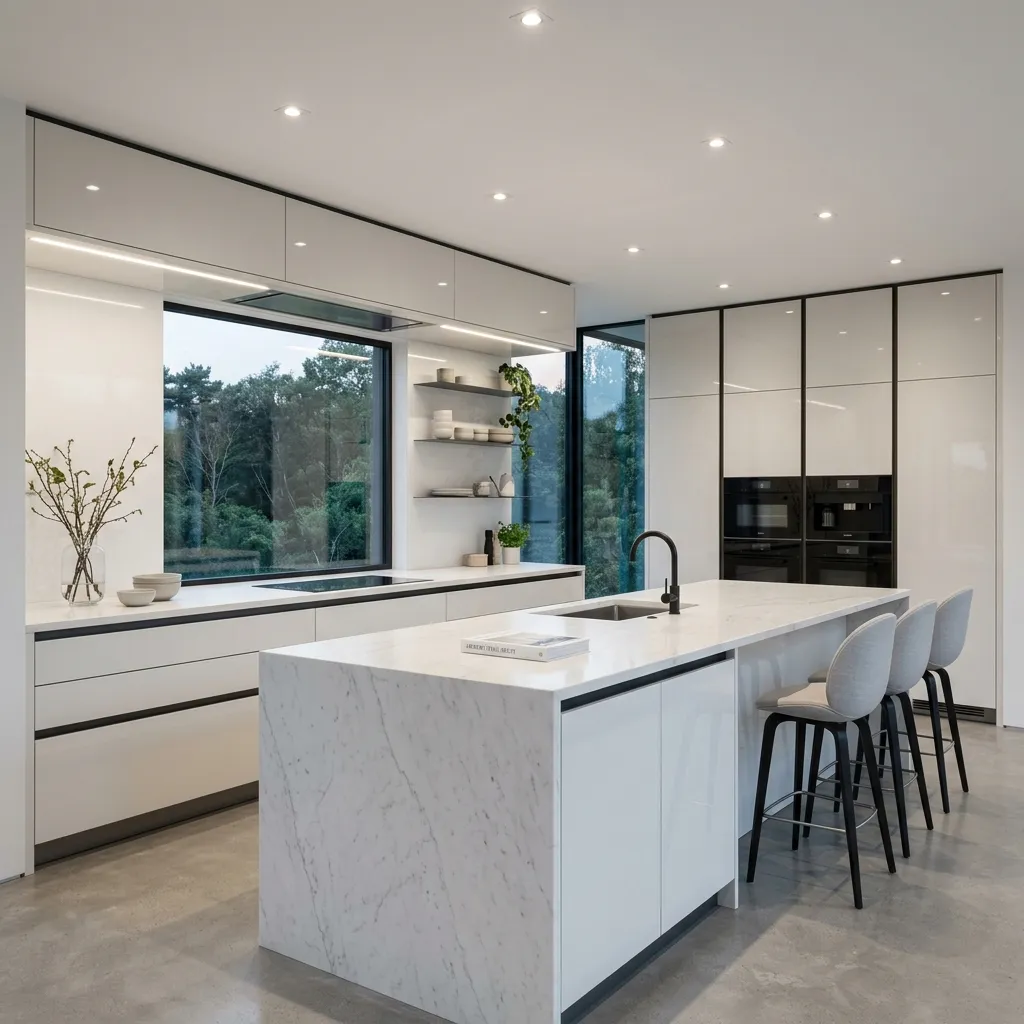
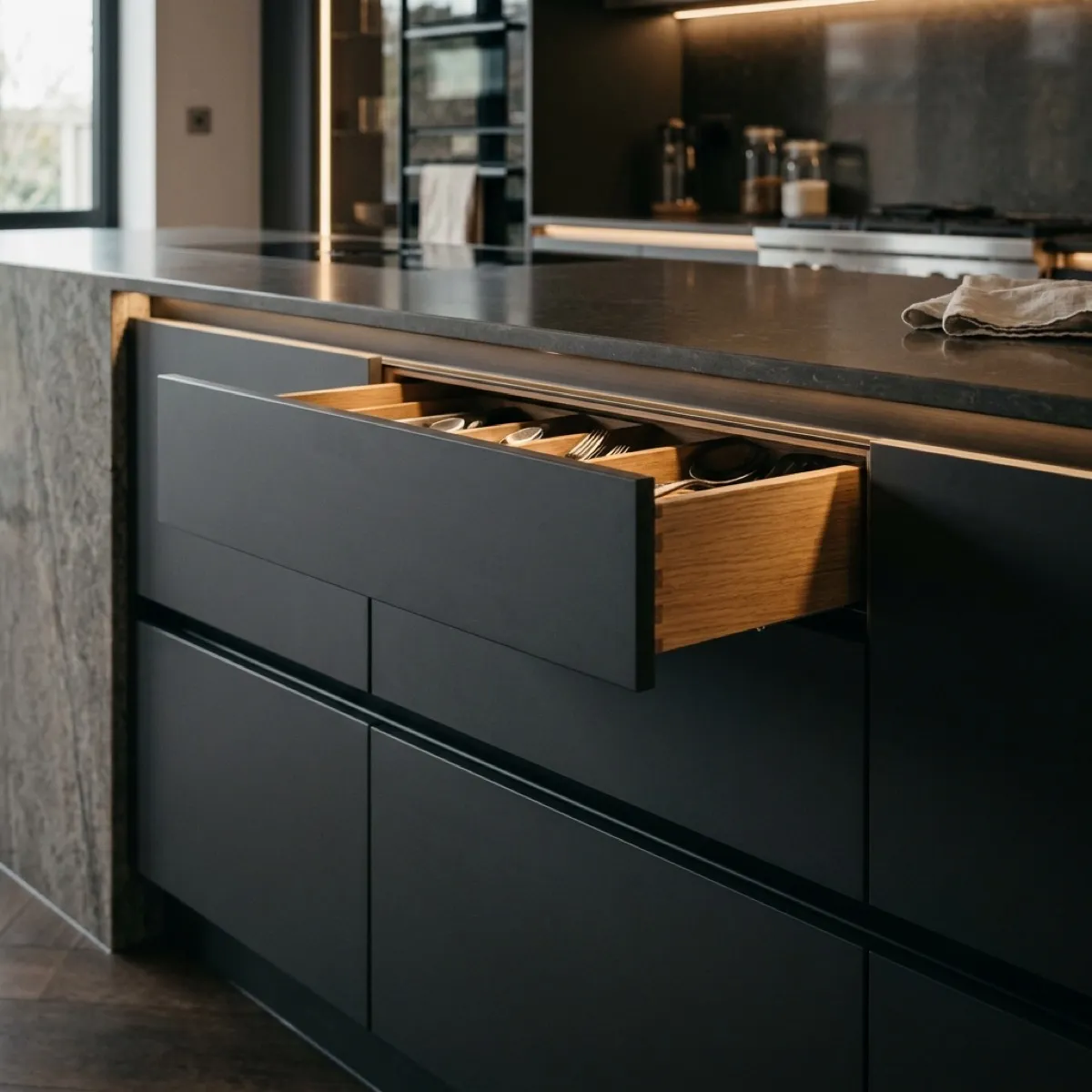
A handleless kitchen doesn't mean doors you can't open. It means the opening mechanism is built into the cabinet carcass or shutter edge rather than screwed onto the front face. The result is a continuous, minimal architectural surface that makes compact kitchens feel calmer and visually wider.
The 4 main types of handleless systems (and how they are built)
1. True Gola / recessed carcass channels (L-Profile & C-Profile)
Unlike edge-mounted handles, a true Gola profile—pioneered in India by brands like Häfele and Hettich—is a heavy-gauge anodised or powder-coated aluminium extrusion notched directly into the cabinet carcass panels on a factory CNC router. Because the channel sits behind the shutter, the shutter edge itself remains completely untouched and PUR-sealed.
- Horizontal L-Gola Profile (56×26 mm): Fitted immediately beneath the countertop to open the top row of drawers or base shutters. Provides a generous 30–35 mm finger recess.
- Horizontal C-Gola Profile (73×26 mm): Installed between the top and middle/bottom tandem drawers so you can pull either the upper drawer from its bottom edge or the lower drawer from its top edge.
- Vertical Gola Profile: Used alongside tall pantry columns and built-in refrigerator housings to provide a full-height ergonomic grip.
2. Integrated G-profile / edge pulls
A slim J- or G-shaped aluminium strip is glued or pressed into the top edge of the shutter itself. It requires no carcass notching and costs less than true Gola, making it a common budget alternative. However, the finger lip is shallower (typically 14–18 mm), so pulling a 40 kg pot-and-pan drawer with wet hands requires more pinch strength, and the exposed metal lip interrupts the laminate colour line.
3. CNC J-pull routed shutters (PU painted)
Instead of adding metal channels, a 22 mm high-density HDHMR shutter has a curved "J" groove CNC-routed directly into its top edge and is then sealed with multiple coats of automotive polyurethane (PU) paint. It delivers the cleanest monolithic look of all, with zero metal showing, though it is only possible with PU or membrane finishes (standard laminate cannot bend into a tight J-groove).
4. Mechanical & electric push-to-open (TIP-ON / Servo-Drive)
A mechanical spring latch or synchronised mechanism—such as Blum TIP-ON BLUMOTION or Hettich Push-to-Open Silent—pops the shutter or drawer open by 40–50 mm when you press the front face. It works brilliantly on overhead wall cabinets (where an LED recessed profile or a 20 mm shutter drop overhang is the other popular handleless trick), but on base cabinets it can be triggered accidentally when you lean against the counter while rolling rotis or chopping vegetables.
| System | Best for | Wet-hand grip | Heavy 40 kg drawers? | 2026 Cost Impact |
|---|---|---|---|---|
| True L & C Gola (Carcass-notched) | Base units, heavy tandem drawers, tall units | Firm (35 mm finger pocket) | Excellent | +₹18,000–₹28,000 per kitchen |
| Shutter-mounted G-Profile | Budget base doors & light drawers | Moderate (pinch grip) | Limited | +₹8,000–₹13,000 per kitchen |
| CNC J-Pull (22 mm PU Shutter) | Luxury islands, PU-finished kitchens | Smooth, ergonomic | Very good | Included in 22 mm PU shutter tier |
| Push-to-Open (TIP-ON) / Overhang | Overhead wall units, loft shutters | No grip needed | Not ideal on base | +₹450–₹2,200 per mechanism |
Why handleless kitchens are taking over
- Easier cleaning. Indian cooking means oil, masala and steam. Protruding handles collect grime around their screw bases; flat shutters wipe clean in one pass.
- Safer in tight spaces. No protruding hardware to catch clothing, hips or a dupatta in a narrow 6-foot-wide galley or parallel kitchen.
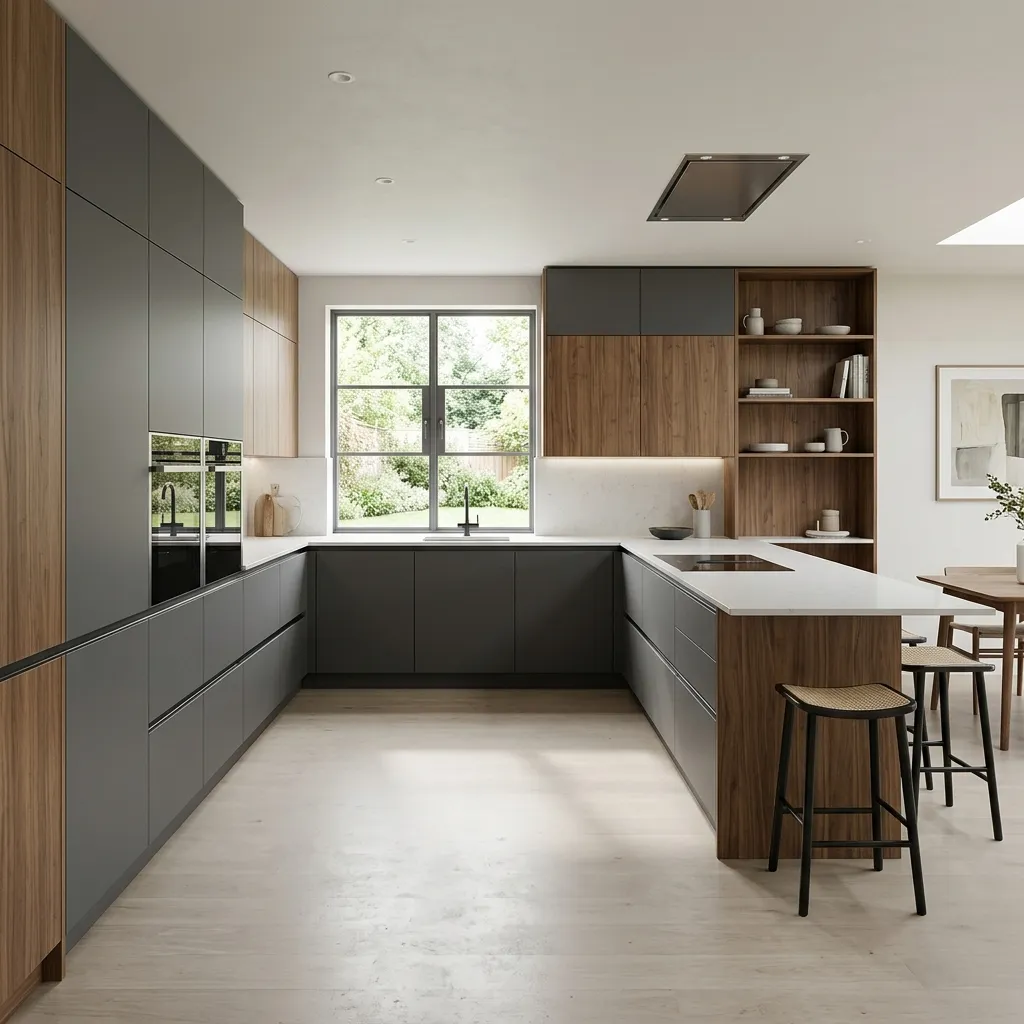
- Visually larger rooms. Continuous surfaces make compact apartment kitchens feel more open, especially in open-plan layouts. Browse real examples in our kitchen design gallery.
- A modern look that lasts. Handle styles date quickly; a clean architectural shadow line stays current for a decade.
Engineering Details Most Contractors Miss: Countertop Overhangs & Dishwashers
A Gola handleless kitchen requires millimetre-accurate coordination between your factory cabinetry team and your granite mason. If you are planning a handleless kitchen, verify these four technical details on your shop drawings:
- Calibrating the Countertop Front Overhang: On a traditional handled kitchen, the granite or quartz counter overhangs the cabinet carcass by 35–40 mm (about 15–20 mm past the 18 mm shutter). If a mason leaves a 25 mm overhang past a Gola shutter, the stone lip will block your knuckles from reaching into the L-Gola channel below! For Gola base cabinets, the stone overhang past the shutter face must be restricted to 10–12 mm with a drip groove underneath.
- Internal Drawer Height Deduction: Because the L-Gola (56 mm) and C-Gola (73 mm) channels occupy vertical space inside the 720 mm carcass height, your top cutlery drawer box must use a low-side-wall runner (such as Blum M-height 90 mm) so the drawer side doesn't collide with the aluminium profile.
- Carcass Notch Sealing: When the 18 mm BIS IS:710 BWP plywood side panels are notched on the CNC router to receive the Gola channel, those raw cut notches must be sealed with PVC edge tape or waterproof polyurethane sealant before sliding the aluminium extrusion in.
- Semi-Integrated Dishwashers & Built-In Refrigerators: Dishwashers have strong door springs. Always run the L-Gola channel continuously across the top of a fully integrated dishwasher door, and use a full-height vertical Gola channel next to built-in refrigerator doors so you have enough leverage to break the magnetic fridge seal effortlessly.
The honest drawbacks
- Cost. Aluminium profiles, corner connectors, end caps, and CNC carcass notching add ₹18,000–₹28,000 over basic surface-mounted handles.
- Fingermarks on edges. You touch the back and top edge of the shutter directly, so very glossy or dark finishes show marks. Matte finishes help.
- Slightly reduced vertical storage (about 5–7%). The 56 mm L-Gola and 73 mm C-Gola channels take up a small strip of vertical carcass space compared with standard drawers.
- Less forgiving installation. Shadow gaps and alignment need to be laser-levelled, or the continuous lines look visibly uneven.
Does it work for heavy Indian cooking?
Yes, with the right system in the right places. The hybrid handleless formula we specify on 80% of our Delhi NCR projects:
- True L- and C-Gola profiles on base units and tandem drawers for a firm, full-finger grip on heavy kadhai and thali loads.
- A 20 mm bottom shutter overhang on main overhead cabinets (so you pull the bottom edge of the wall door without touching the front face) and push-to-open latches on ceiling loft shutters.
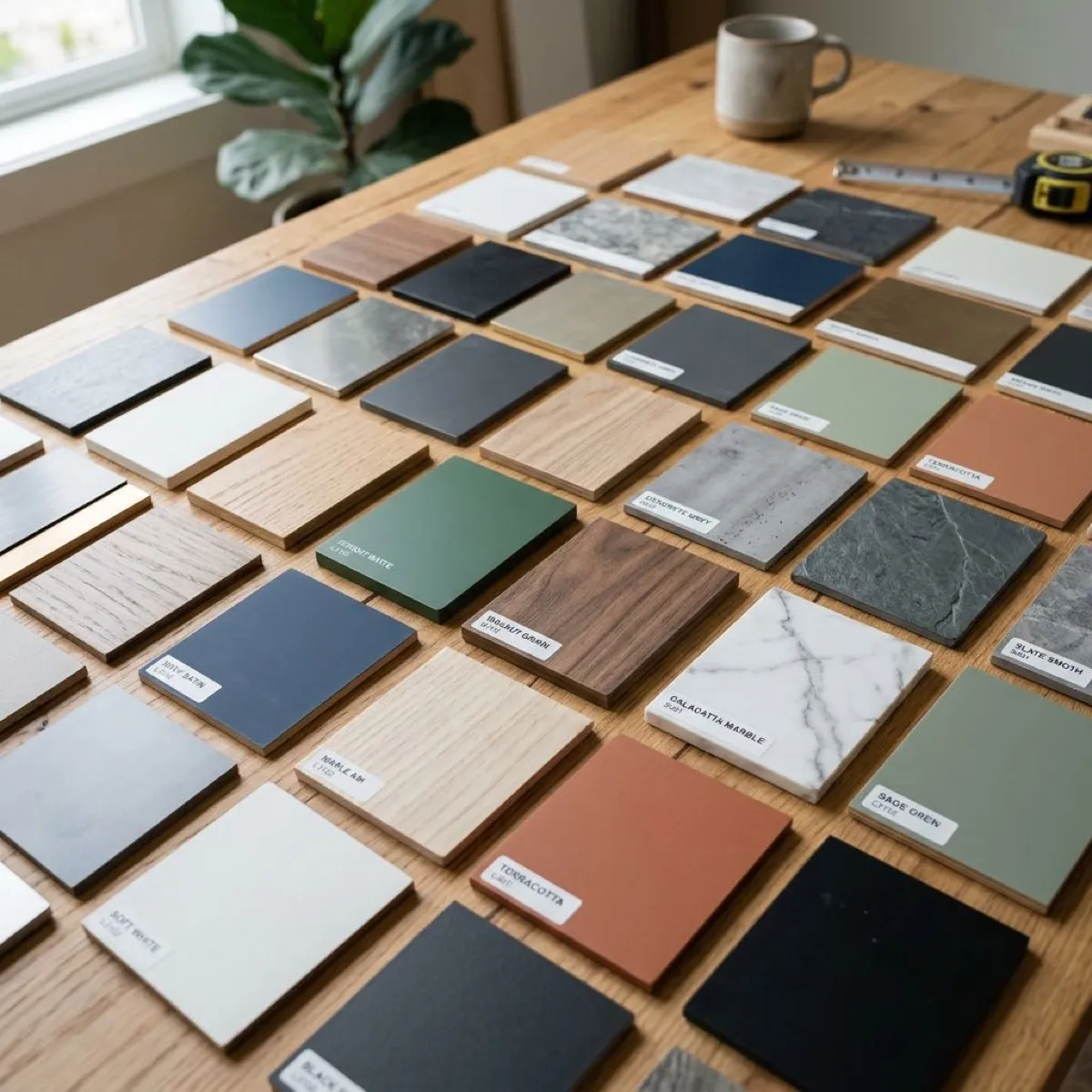
- Matte or anti-fingerprint laminate shutters so direct-touch surfaces stay clean. See our laminates guide.
Handleless works best as a system: a firm Gola profile where you pull hardest, a 20 mm hidden overhang where you reach up, and a finish that forgives fingers.
What does going handleless cost?
Expect a true anodised aluminium Gola system to add roughly 6–9% (around ₹18,000 to ₹28,000 on a mid-sized kitchen) over standard surface handles. Using Gola profiles on base units paired with a 20 mm shutter drop overhang on overheads is the smartest way to get a 100% handleless look while keeping hardware budgets tight. For overall budgets, see our modular kitchen cost guide for Delhi NCR.
The verdict
Handleless kitchens are more than a passing trend. They're genuinely easier to wipe down after tadka and safer in compact apartment layouts. For Indian homes, the key is choosing deep, carcass-recessed Gola profiles for daily-use base drawers rather than going all-in on push-to-open latches. Plan it as an engineered system and a handleless kitchen will handle years of serious cooking.
Frequently asked questions
Are handleless kitchens practical in India?
Yes, when the right system is used. Gola or channel profiles give a firm grip for heavy base drawers, while push-to-open works well for overhead cabinets. Flat shutters are also easier to clean after oily, spice-heavy cooking.
What is a Gola profile in a kitchen?
A Gola profile is an aluminium channel fitted between cabinets that creates a recess for your fingers to grip the shutter edge, replacing visible handles with a clean shadow line.
Are handleless kitchens more expensive?
Usually, yes. Aluminium profiles and push-to-open mechanisms typically add to the cost compared with standard handles. Using profiles only on base units is a common way to manage the budget.
Do handleless kitchen cabinets get dirty easily?
You touch the shutter edge or face directly, so glossy or dark finishes may show fingermarks. Matte or anti-fingerprint laminates reduce this, and flat shutters are still easier to wipe than handles.
Planning a kitchen in Delhi NCR?
Get a free, itemised estimate and a 3D design consultation from our kitchen designers.